This summer has been a very busy one. Various other responsibilities (including a new job) have left me with very little time to keep up with this blog. Fortunately, my hops can look after themselves to a great extent, especially with an automatic drip watering system in place. I was able to take a picture for the weekly overview and I've put the progression down the right hand side of the web-version. You can see from these that both plants do very little growing over August and September. Can't really blame them though, it's been very hot here (even the grass has stopped growing).
The whole reason for growing hops is to have cones that can be harvested and put in beer. The first cones appeared at the end of May:

This is in a very early stage of development. My understanding is this is the stage at which they may be pollinated if there are male plants in the vicinity. As with last year, the Columbus produced both male:

And female cones (you can see some male flowers in this pic too):

I have yet to see any indication that there has been any successful pollination happening, either with itself or the Cascade which is right beside it. Some of this is presumably due to the timing, the male flowers always appear after the female flowers (on both plants) are no longer in the receptive "burr" stage.
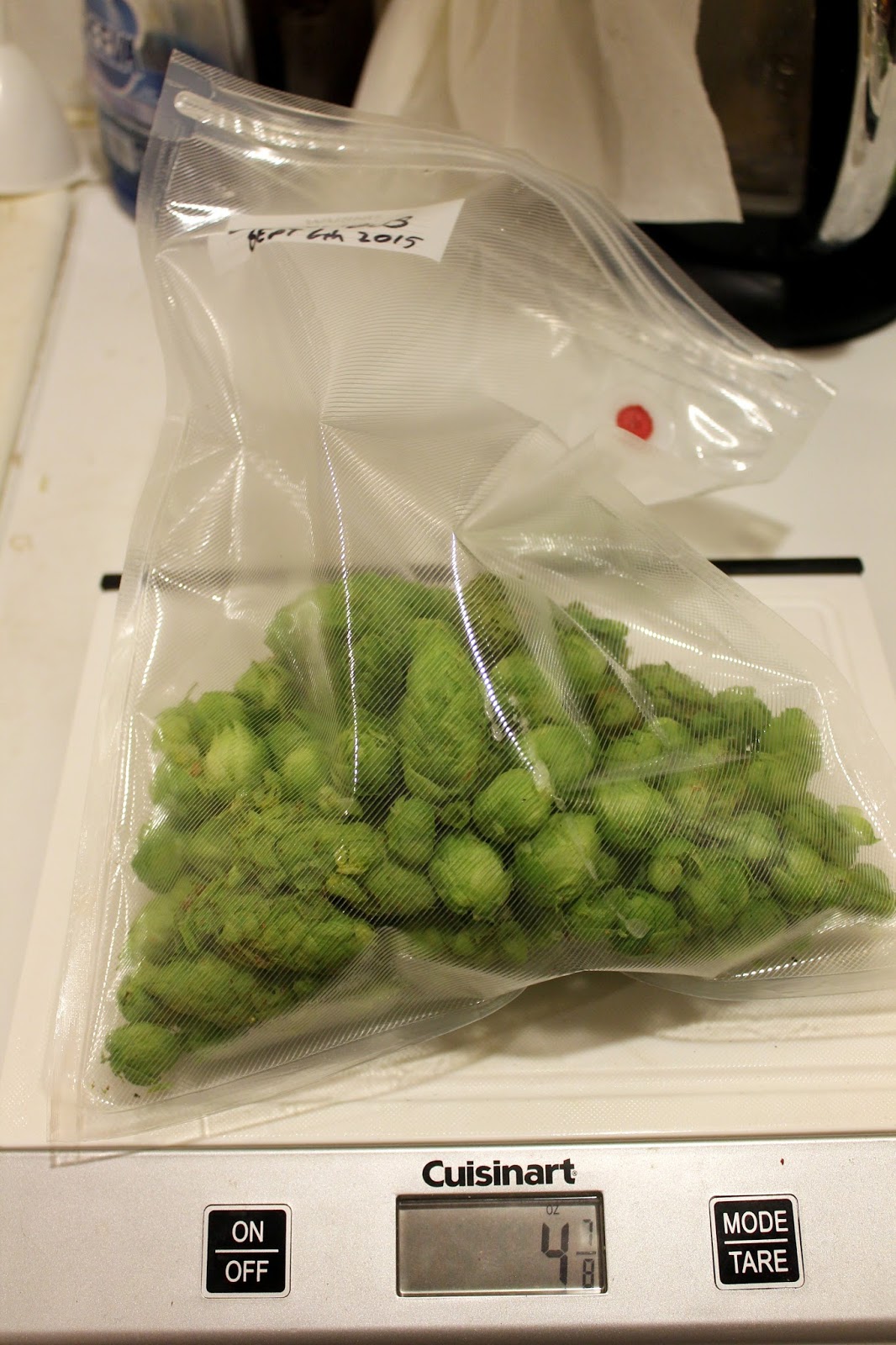
The final result of all this growth and cone formation was this:

12oz of Columbus and 1oz of Cascade were vacuum sealed and thrown in the freezer. Shame that the Cascade proved to not be very productive this year. Perhaps this will improve once it has established itself more. Alternatively, the Columbus may just push out all of the competition. The Willamette has been almost absent this year. Here's what it looks like at the start of September (you might just be able to see it growing up along the string of lights to the right):

One of the nice things about having a nano operation like this is that I can get more than one harvest per year. While I was picking these first cones I saw this on the Columbus:

Which led to this second harvest (close to another 5oz of Columbus):
Looking forward to putting these into some beer later in the year.
Bugs have caused as much of a problem as they did last year, which is to say not enough to make a noticeable difference to the growth of the plants. Here's a typical example of the worst kind of leaf damage I've seen:

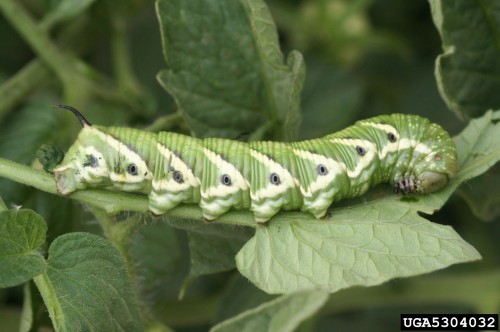
Anybody following from my days in Houston might remember I had previously found a tobacco hornworm on our tomato plants next to my hops. Same thing happened this year too, only with a worse outcome for the hornworms:


This rather gruesome end comes thanks to a parasitic (Braconid) wasp that lays its eggs inside the worm. When the eggs hatch they eat the hornworm from the inside. When the time comes they chew their way through the skin and form a pupa on the outside (those small white things hanging from the worm). Not entirely sure how they convince the hornworm to grip the underside of the plant like that but then I'm also not entirely sorry for them either.
Now we are into September there are signs that Autumn may be on its way. The Cascade, which has always been less productive in comparison to the Columbus, already has some bines that have died off:

The Columbus also has some signs of the oncoming autumnal purge, even if not quite as dramatic as the Cascade:

All told the summer appears to have been much less productive compared to last year. The Columbus gave me a ~1lb this year compared to nearly 2lbs last year, the Cascade a handful of cones vs nearly 2oz last year, and the Willamette barely even appeared and didn't produce any cones at all. I'm wondering if this is due to neglect on my part or perhaps the extreme heat of this summer. I don't remember the grass stopping growing altogether last year. All of this after the extreme cold of last winter. I had to entirely cut back a pair of well established fig trees that didn't make it through the cold. Obviously, I'm leaning towards the climate being the problem, especially given that we used an automatic drip system this year which should have taken a lot of the neglect out of the equation. Hopefully the coming winter will be milder and the following summer kinder. Regardless, I will still be using what I've gathered for a fresh hopped beer of some description in the coming months.